Introduction
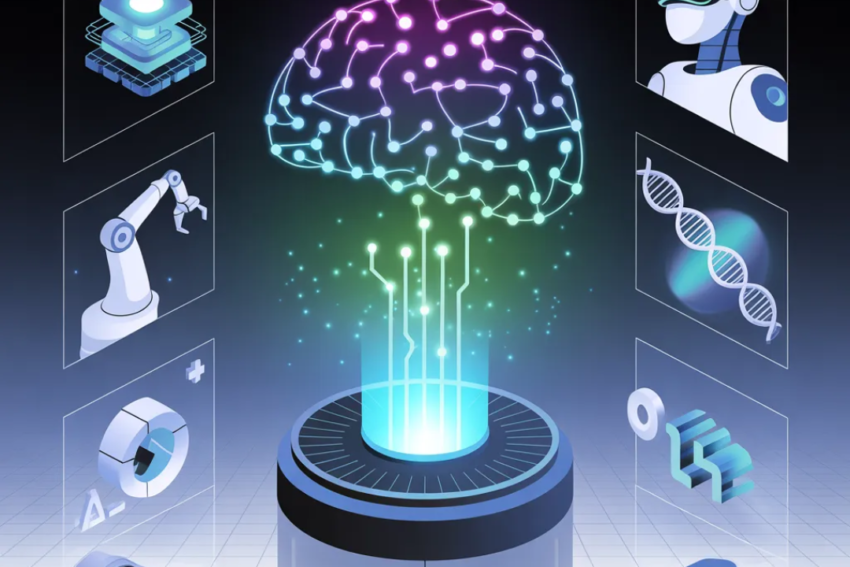
Innovation has always been the foundation of human progress. From the Industrial Revolution to the Digital Age, technology has continuously transformed the way societies function. In the present era, Artificial Intelligence (AI) has emerged as one of the most powerful drivers of innovation. Alongside AI, a range of emerging technologies such as the Internet of Things (IoT), Big Data, Cloud Computing, Blockchain, Robotics, Augmented Reality (AR), Virtual Reality (VR), and Quantum Computing are reshaping industries and redefining human potential.
Artificial Intelligence refers to the ability of machines to perform tasks that typically require human intelligence, including learning, reasoning, decision-making, and problem-solving. Emerging technologies enhance these capabilities by providing connectivity, scalability, security, and immersive experiences. Together, AI and emerging technologies are driving innovation across sectors such as healthcare, education, business, transportation, agriculture, and entertainment.
This article explores how Artificial Intelligence, in collaboration with emerging technologies, is driving innovation, transforming industries, and shaping the future of the global economy and society.
Understanding Artificial Intelligence
Artificial Intelligence is a branch of computer science focused on developing systems that can simulate human intelligence. AI systems are designed to analyze data, recognize patterns, learn from experience, and make decisions with minimal human intervention.
AI can be categorized into three main types:
- Narrow AI: Designed for specific tasks such as speech recognition, facial recognition, and recommendation systems.
- General AI: A theoretical concept where machines possess human-level intelligence.
- Super AI: A future stage where AI surpasses human intelligence.
Most modern AI applications rely on machine learning, deep learning, and neural networks. These technologies enable AI systems to process massive amounts of data, making them essential tools for innovation in the digital age.
Emerging Technologies Supporting AI-Driven Innovation
Emerging technologies are innovations that are still evolving but have the potential to create significant impact across industries. AI acts as the central intelligence that enhances the efficiency and effectiveness of these technologies.
1. Internet of Things (IoT)
The Internet of Things connects physical devices through sensors and networks, allowing them to collect and exchange data. AI analyzes IoT data to enable automation, prediction, and real-time decision-making. Smart homes, wearable health devices, industrial monitoring systems, and smart cities are examples of AI-powered IoT applications driving innovation.
2. Big Data and Analytics
The digital world generates enormous volumes of data every second. Big Data refers to large and complex datasets that cannot be processed using traditional methods. AI-driven analytics tools help organizations extract meaningful insights from this data, improving strategic planning, customer experiences, and operational efficiency.
3. Cloud Computing
Cloud computing provides scalable and flexible infrastructure for AI applications. It allows businesses to store data, run applications, and collaborate globally without investing in expensive hardware. AI-based cloud services accelerate innovation by enabling rapid development and deployment of intelligent solutions.
4. Blockchain Technology
Blockchain is a decentralized and secure digital ledger that records transactions transparently. When combined with AI, blockchain enhances data security, trust, and fraud detection. This integration is driving innovation in finance, supply chain management, healthcare records, and digital identity systems.
5. Robotics and Automation
AI-driven robots are transforming manufacturing, healthcare, logistics, and agriculture. These robots can perform repetitive and complex tasks with precision, adapt to changes, and work alongside humans. Automation powered by AI improves productivity, safety, and cost efficiency.
6. Augmented Reality (AR) and Virtual Reality (VR)
AR and VR technologies create immersive digital experiences. AI enhances these experiences by enabling realistic simulations, intelligent interactions, and personalized environments. Education, training, healthcare, gaming, and real estate are benefiting from AI-powered AR and VR innovations.
7. Quantum Computing
Quantum computing uses principles of quantum mechanics to perform extremely complex calculations at high speeds. Although still in its early stages, quantum computing combined with AI has the potential to revolutionize scientific research, cryptography, climate modeling, and drug discovery.
Innovation Across Key Sectors
1. Healthcare
AI and emerging technologies are driving innovation in healthcare by improving diagnosis, treatment, and patient care. AI systems analyze medical images, detect diseases early, and recommend personalized treatment plans. Wearable devices and remote monitoring systems enable continuous health tracking, while robotic surgeries improve precision and recovery times.
2. Education
In education, AI-powered platforms provide personalized learning experiences based on students’ strengths and weaknesses. Virtual classrooms, intelligent tutoring systems, and automated assessments enhance accessibility and learning outcomes. These innovations support lifelong learning and skill development.
3. Business and Industry
Businesses are using AI and emerging technologies to transform operations and drive innovation. Automation, predictive analytics, and AI-driven customer service improve efficiency and competitiveness. Industries such as manufacturing, retail, and finance rely on intelligent systems for demand forecasting and risk management.
4. Transportation
AI is revolutionizing transportation through self-driving vehicles, smart traffic management systems, and predictive maintenance. These innovations improve road safety, reduce congestion, and promote sustainable mobility.
5. Agriculture
In agriculture, AI-powered drones, sensors, and analytics tools enable precision farming. Farmers can monitor crop health, optimize irrigation, and predict yields. These innovations increase productivity, reduce environmental impact, and support food security.
6. Entertainment and Media
AI is transforming entertainment and media through content creation, recommendation systems, and digital marketing. Streaming platforms use AI to personalize user experiences, while game developers create realistic virtual environments using intelligent algorithms.
Economic Impact and Workforce Transformation
AI and emerging technologies are reshaping the global economy by increasing productivity, driving innovation, and creating new industries. While automation may replace some traditional jobs, it also creates new opportunities in fields such as data science, AI development, cybersecurity, and digital ethics.
To adapt to this transformation, governments and educational institutions must focus on reskilling and upskilling the workforce. Digital literacy and continuous learning are essential for future economic growth.
Ethical and Social Challenges
Despite their benefits, AI and emerging technologies raise important ethical and social concerns:
- Data Privacy and Security: AI systems rely on large datasets, raising concerns about data misuse and cyber threats.
- Bias and Fairness: AI algorithms may reflect biases present in training data.
- Transparency and Accountability: Understanding how AI systems make decisions is essential for trust.
- Digital Divide: Unequal access to technology can increase social and economic inequality.
Addressing these challenges requires ethical guidelines, regulations, and responsible innovation.
The Future of AI-Driven Innovation
The future of innovation lies in human-centered AI, where technology enhances human abilities rather than replacing them. Collaboration between humans and intelligent machines will define the next phase of technological progress.
AI and emerging technologies will play a crucial role in addressing global challenges such as climate change, healthcare accessibility, and sustainable development. Smart cities, renewable energy systems, and intelligent governance will depend heavily on AI-powered innovations.
Conclusion
Artificial Intelligence and emerging technologies are powerful drivers of innovation in the modern world. AI acts as the central intelligence that enhances the capabilities of IoT, blockchain, cloud computing, robotics, AR/VR, and other emerging technologies. Together, they are transforming industries, economies, and societies.
While these technologies offer immense opportunities for growth, efficiency, and innovation, they also present ethical and social challenges. Responsible development, strong governance, and continuous learning are essential to harness their full potential.
As the world moves forward in the digital age, Artificial Intelligence and emerging technologies will continue to drive innovation, shaping a smarter, more connected, and more sustainable future.