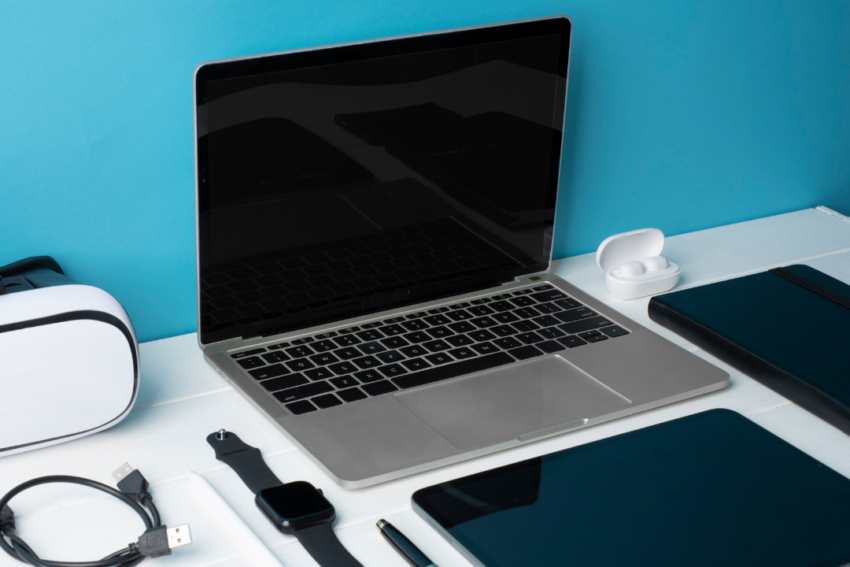
Technology continues to evolve at an incredible pace, and tech hardware innovation plays a major role in shaping the future of computing, communication, and digital experiences. Every year, new hardware breakthroughs push the boundaries of performance, efficiency, and design. From powerful processors to foldable devices and quantum computing chips, modern hardware innovations are transforming industries and everyday technology.
In recent years, companies have been focusing on developing faster processors, smarter AI hardware, and more efficient storage solutions. These innovations not only improve performance but also open the door for entirely new technologies.
In this article, we will explore some of the latest tech hardware innovations you should know about and how they are shaping the future of technology.
1. Next-Generation AI Processors
Artificial intelligence has become one of the most important areas of technology, and hardware manufacturers are building specialized processors designed specifically for AI workloads.
Modern AI chips are capable of performing billions of calculations per second and are used for tasks such as:
- Machine learning
- Image recognition
- Voice assistants
- Autonomous vehicles
For example, advanced processors like the AMD Ryzen 9 9950X3D feature powerful multi-core architectures and large 3D cache systems that significantly improve performance in gaming and content creation workloads. (en.wikipedia.org)
AI processors are becoming essential in smartphones, data centers, and smart devices, enabling faster and more efficient processing.
2. Quantum Computing Chips
Quantum computing is considered one of the most revolutionary hardware innovations in modern technology. Unlike traditional computers that use bits, quantum computers use qubits, allowing them to perform extremely complex calculations.
For instance, Google’s Willow quantum processor uses more than 100 qubits and can solve certain computational problems far faster than conventional supercomputers. (Wikipedia)
Quantum computing could transform industries such as:
- Drug discovery
- Climate modeling
- Cryptography
- Financial analysis
Although still in early development, quantum hardware represents the future of high-performance computing.
3. Foldable and Flexible Devices
Hardware design is also evolving with foldable and flexible displays. These devices allow screens to bend or fold, creating new types of laptops, tablets, and smartphones.
For example, foldable laptops like the Huawei MateBook Fold feature large OLED displays that fold in half, offering both portability and a large workspace. (Wikipedia)
Benefits of foldable hardware include:
- Larger displays in compact devices
- Improved multitasking
- Innovative device designs
This technology is expected to expand further as materials and display technologies continue to improve.
4. Ultra-High-Capacity Storage Drives
As data usage grows rapidly, storage technology must also evolve. Recent innovations have produced extremely high-capacity storage drives designed for large-scale data centers.
Some modern hard drives now reach capacities of 44 terabytes, using advanced technologies like heat-assisted magnetic recording (HAMR) to increase data density. (tomshardware.com)
These storage innovations are important for:
- Cloud computing
- Artificial intelligence workloads
- Big data processing
- Enterprise storage systems
High-capacity storage helps organizations manage massive amounts of digital data efficiently.
5. Edge AI Hardware
Traditional computing systems often rely on cloud servers to process data. However, a new trend known as edge computing allows data to be processed closer to where it is generated.
Edge AI hardware is designed to run machine learning models directly on devices such as:
- Smartphones
- Security cameras
- IoT devices
- Industrial sensors
This reduces latency, improves privacy, and lowers cloud processing costs. (forbes.com)
Edge computing is expected to become a key technology in smart cities, autonomous vehicles, and industrial automation.
6. Advanced Display Technologies
Display technology has also seen major advancements in recent years. Modern screens now offer brighter visuals, better color accuracy, and improved energy efficiency.
Some innovations include:
- Ultra-bright OLED displays
- Privacy display technology
- Slidable and expandable screens
- Bezel-less designs
For example, new display technologies demonstrated at major tech events promise brightness levels up to 5,000 nits, significantly improving outdoor visibility and image quality. (androidcentral.com)
These improvements enhance the user experience in smartphones, laptops, and televisions.
7. 5nm and Advanced Semiconductor Chips
Semiconductor manufacturing continues to shrink chip sizes, enabling faster and more energy-efficient processors.
Modern chips built using 5-nanometer technology allow manufacturers to pack billions of transistors into tiny processors. This leads to:
- Better performance
- Lower power consumption
- Improved battery life
Many modern smartphones now use advanced system-on-chip (SoC) designs that integrate CPU, GPU, AI engines, and connectivity features in a single chip.
8. Neuromorphic Computing Hardware
Neuromorphic computing is an emerging field inspired by the structure of the human brain. These specialized chips mimic neural networks and process information in parallel.
Advantages of neuromorphic hardware include:
- High efficiency for AI tasks
- Faster pattern recognition
- Reduced power consumption
This technology could play a key role in future robotics, artificial intelligence systems, and autonomous machines.
9. Robotics Hardware and AI Machines
Modern robotics hardware is becoming more advanced thanks to improvements in sensors, processors, and AI algorithms.
New robots are capable of performing complex tasks such as:
- Industrial automation
- Warehouse management
- Medical assistance
- Customer service
Recent innovations include humanoid robots capable of interacting with humans and performing everyday tasks, demonstrating how hardware and AI are merging to create intelligent machines. (tomsguide.com)
10. Next-Generation Gaming Hardware
Gaming hardware continues to push the limits of performance and graphics capabilities. New consoles and gaming devices are designed to provide faster processing, higher frame rates, and better visual quality.
Next-generation gaming systems aim to integrate gaming across multiple platforms, allowing players to enjoy seamless experiences across consoles and PCs. (timesofindia.indiatimes.com)
Advances in GPUs, ray tracing technology, and high-refresh-rate displays are making gaming more immersive than ever.
Conclusion
Hardware innovation is the foundation of technological progress. From quantum processors and AI chips to foldable devices and ultra-fast storage solutions, the latest hardware developments are shaping the future of computing and digital experiences.
As companies continue to push the limits of engineering and design, we can expect even more powerful and efficient hardware technologies in the coming years. Staying informed about these innovations helps individuals and businesses understand where technology is heading and how it can impact everyday life.
The future of technology will be driven not only by software but also by groundbreaking hardware innovations that redefine what computers and devices can achieve.